This website uses cookies
Read our Privacy policy and Terms of use for more information.
One Perspective In Psychology
Jul 28, 2025
•
1 min read
Behaviorism In Psychology
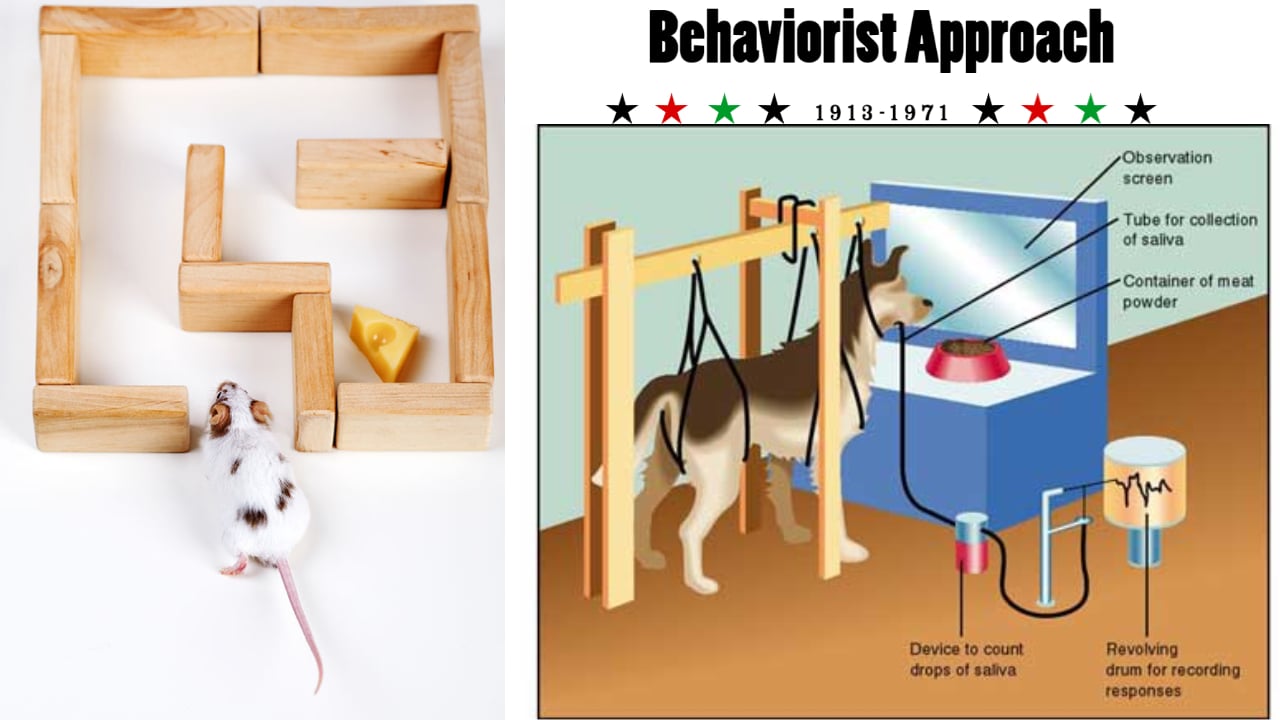
Behaviorism, also known as behavioral learning theory, is a theoretical perspective in psychology that emphasizes the role of learning and observable behaviors in understanding human and animal actions.
www.simplypsychology.org/behaviorism.html
Classical Conditioning: How It Works With Examples
Classical conditioning is learning through association and was discovered by Pavlov, a Russian physiologist. In simple terms, two stimuli are linked together to produce a new learned response in a person or animal.
www.simplypsychology.org/classical-conditioning.html
Operant Conditioning In Psychology: B.F. Skinner Theory
Operant conditioning is a method of learning that occurs through rewards and punishments for behavior. B.F Skinner is regarded as the father of operant conditioning and introduced a new term to behavioral psychology, reinforcement.
www.simplypsychology.org/operant-conditioning.html
Skinner Box: What Is an Operant Conditioning Chamber?
The Skinner box, otherwise known as an operant conditioning chamber, is a laboratory apparatus used to study animal behavior within a compressed time frame.
www.simplypsychology.org/what-is-a-skinner-box.html
John B. Watson: Contribution to Psychology
Although John Broadus Watson made several contributions to the field of psychology, most notably his work with Rosalie Rayner on conditioned emotional conditioning.
www.simplypsychology.org/john-b-watson.html
Schedules of Reinforcement in Psychology (Examples)
Schedules of reinforcement are rules that control the timing and frequency of reinforcement delivery in operant conditioning. They include fixed-ratio, variable-ratio, fixed-interval, and variable-interval schedules, each dictating a different pattern of rewards in response to a behavior.
www.simplypsychology.org/schedules-of-reinforcement.html
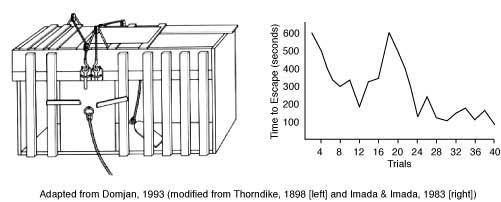
Edward Thorndike: The Law of Effect
The law of effect states that behaviors followed by pleasant or rewarding consequences are more likely to be repeated, while behaviors followed by unpleasant or punishing consequences are less likely to be repeated.
www.simplypsychology.org/edward-thorndike.html
simplypsychologyofficial4,362 followersView more on InstagramsimplypsychologyofficialAdd a comment...
simplypsychologyofficial
4,362 followers
View more on Instagram
Login or Subscribe to participate